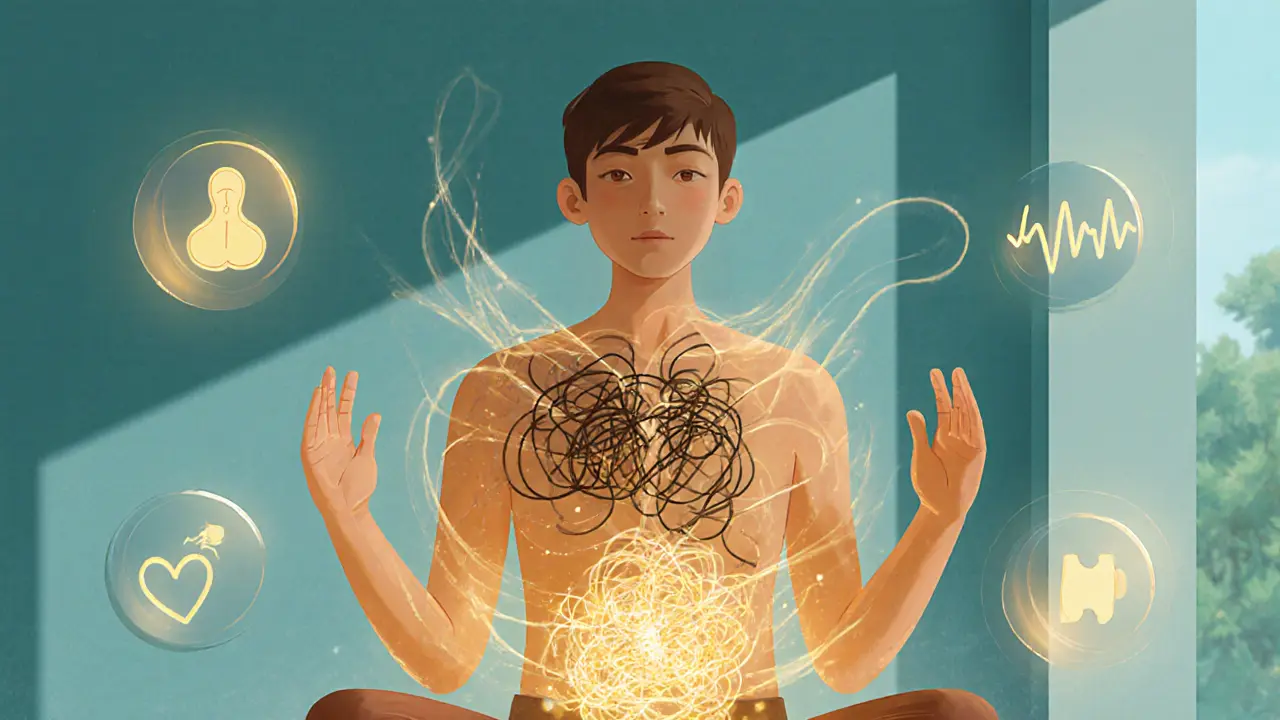
Senzomotorická psychoterapie: Co to je a jak pomáhá tělu a duši
When you feel anxious but can’t explain why, or when old pain shows up as clenched shoulders or a knot in your stomach, that’s not just ‘in your head’—it’s your body remembering. Senzomotorická psychoterapie, přístup, který pracuje s tělesnými pocity jako klíčem k emocionálnímu uzdravení. Also known as tělesně orientovaná terapie, it doesn’t ask you to talk your way out of pain—it helps you feel your way through it. This isn’t about massage or stretching. It’s about listening to what your body has been holding onto when words failed.
People who’ve survived trauma, chronic stress, or deep anxiety often get stuck in fight-or-flight mode. Their nervous system never got the signal that danger passed. Senzorická integrace, schopnost mozku správně zpracovávat vstupy z působení prostředí becomes disrupted. That’s where tělesná terapie, metoda, která pomáhá obnovit spojení mezi myslí a tělem steps in. It doesn’t erase the past. It teaches your body it’s safe to relax now. You learn to notice tension before it becomes panic, to breathe when your chest feels tight, to move when you’re frozen. These aren’t tricks—they’re rewiring.
This approach works especially well for those who’ve tried talk therapy but still feel disconnected from themselves. You don’t need to remember every detail of what hurt you. You just need to notice how your body reacts when certain thoughts come up. A therapist guides you through small, manageable sensations—like the weight of your feet on the floor, the rhythm of your breath, the warmth in your hands. These tiny anchors help you return to the present when your mind spirals back to the past.
It’s not magic. It’s science. Studies show that when people learn to regulate their nervous system through body awareness, symptoms of PTSD, depression, and chronic stress drop significantly. And unlike medication, this doesn’t numb you—it gives you back control.
In our collection, you’ll find real stories and practical insights on how this method fits into broader healing—whether you’re dealing with childhood trauma, sensory overload from autism, or just that constant low hum of anxiety that never goes away. You’ll see how it connects with other approaches like EMDR, DBT, and trauma-focused therapy. And you’ll learn why sometimes, the most powerful change starts not in your thoughts, but in your fingertips, your breath, your heartbeat.